TenneT and National Grid Working Towards LionLink FID
The two TSOs have formalised joint development arrangements for the 2 GW UK-Netherlands hybrid interconnector, advancing the project toward a final investment decision.
© LionLink
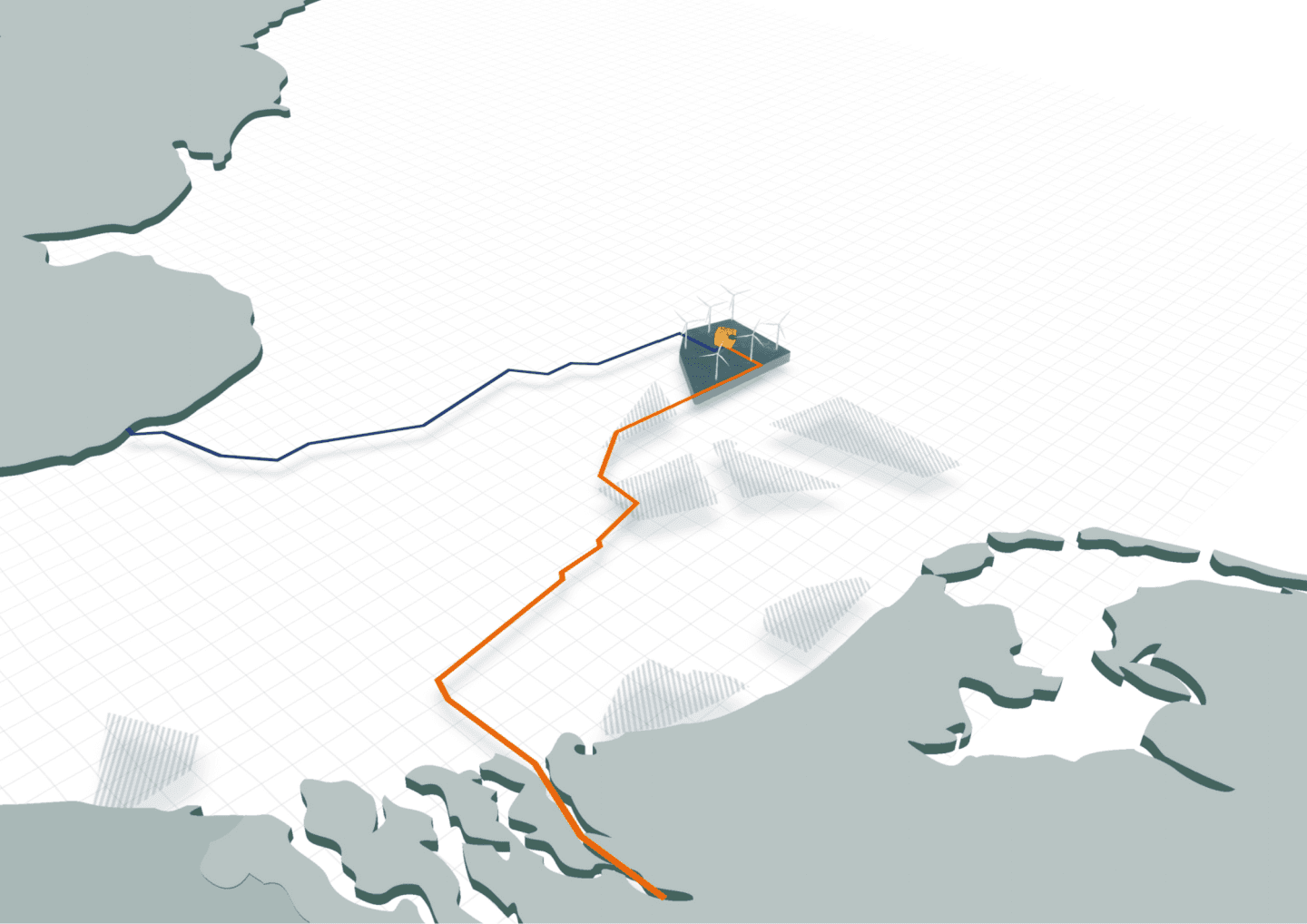
TenneT and National Grid Ventures (NGV) have signed a Joint Development Agreement (JDA) to progress LionLink, a hybrid interconnector that will link the UK and the Netherlands via a future offshore wind farm in the Dutch North Sea.
Agreement Scope
The JDA sets out how the two transmission system operators will jointly develop LionLink towards a final investment decision, covering arrangements for procurement, governance, and planning. It also aims to increase transparency on projected project costs ahead of construction.
Jan-Paul Dijckmans, TenneT director for strategy and partnerships, said the hybrid interconnector will strengthen security of supply in both countries, enable more efficient use of offshore grid infrastructure, reduce overall system costs, and support deeper integration of the European electricity market.
Project Overview
LionLink is designed as a multi-purpose, or hybrid, interconnector, combining cross-border electricity trading with a direct connection to the planned Nederwiek 3 offshore wind farm in the Dutch North Sea. According to the developers, this configuration will maximise the use of offshore wind, provide additional system flexibility, and reduce the total volume of offshore infrastructure required compared with separate radial and interconnector connections.
The link is planned to have a capacity of up to 2 GW, enough to supply around 2.5 million households. It is expected to be commissioned in the early 2030s, with National Grid Ventures previously indicating an operational target of 2032.
On the UK side, NGV has selected Walberswick in Suffolk as the preferred landfall location for the subsea cable, citing a shorter onshore route of 19.9 kilometres compared with the alternative at Southwold. Approximately 84 per cent of the UK section of the LionLink cable will be offshore, with all onshore sections to be buried underground.
Planning and Regulatory Progress
The LionLink project was launched in April 2023, when the Netherlands and the UK announced plans for what they described as a first-of-its-kind electricity link between the two countries. National Grid Lion Link Limited subsequently applied to UK energy market regulator Ofgem for a licence to operate the interconnector in Great Britain, and Ofgem granted the project a pilot regulatory regime in principle in 2024.
In the Netherlands, TenneT contracted GEOxyz in 2023 to carry out geophysical and geotechnical surveys for the export cable route from the Nederwiek 3 site. In May 2024, Next Geosolutions began a cable route survey for the LionLink line on the UK side. LionLink was included in the Dutch Offshore Wind Energy Development Framework at the start of 2025.
In the UK, LionLink is expected to submit its Development Consent Order application to the Planning Inspectorate in 2026, with a decision anticipated in 2027.
Dutch Offshore Bidding Zone
On 31 March 2026, Dutch Climate and Green Growth Minister Stientje van Veldhoven-van der Meer formalised a decision to establish a new offshore electricity bidding zone in the Netherlands, applying to the Nederwiek 3a and 3b wind farm sites that will connect to the TenneT offshore platform linked to LionLink.
The new zone is required because structural congestion is expected to occur on the connection between the offshore platform and the Dutch coast, and EU rules stipulate that bidding zones must not contain structural congestion. TenneT demonstrated the congestion issue in a report approved by the Authority for Consumers and Markets (ACM) on 25 March 2025. The new offshore zone will function independently of the existing Dutch bidding zone and is expected to have a lower average annual electricity price.
BritNed Context
The JDA was announced alongside the 15-year operational anniversary of BritNed, the existing 1 GW subsea interconnector between Great Britain and the Netherlands co-owned by National Grid and TenneT. Since entering service in 2011, the 260 kilometre link has enabled nearly 93 TWh of electricity trading between the two countries. Over the past five years, BritNed has exchanged enough electricity annually to power around 1.4 million households, and has generated approximately EUR 1 billion in auction revenues on the Dutch side over its operational lifetime.
Sign up to our monthly HVDC newsletter
Join 10k+ energy professionals. Get the latest project updates, technology breakthroughs, and market analysis delivered monthly.
No spam. Unsubscribe anytime.