SunZia HVDC Wind Corridor Reaches Commercial Operation
Pattern Energy's 3,650 MW New Mexico wind project and its ±525 kV VSC HVDC link have entered commercial operation, with CAISO generation records already surpassed.
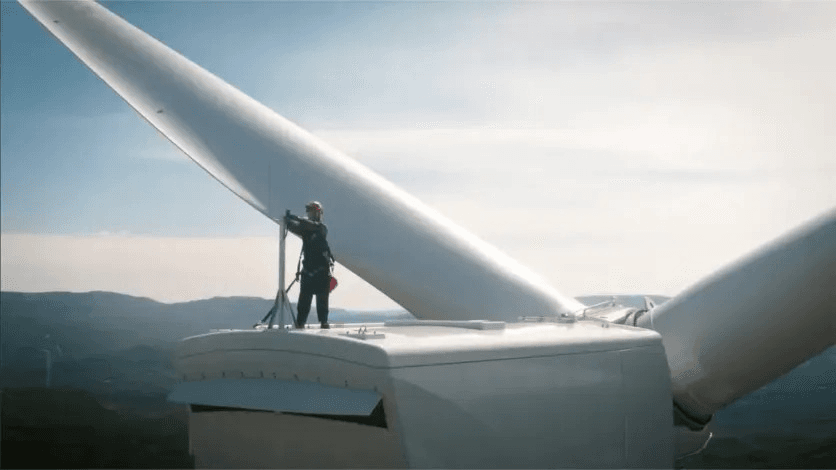
Pattern Energy's SunZia Wind and Transmission project entered commercial operation in June 2026, marking the completion of the largest wind energy and HVDC transmission buildout in the United States. The project comprises a 3,650 MW wind farm across Lincoln, Torrance, and San Miguel counties in central New Mexico, connected to Arizona and Southern California via a 550-mile ±525 kV high-voltage direct current transmission corridor. Total investment across both the wind and transmission components stands at $11 billion, with construction having begun in 2023 following nearly two decades of permitting and development that commenced in 2006.
The wind farm's 916 turbines are split between two suppliers: GE Vernova delivered 674 units of its 3.6-154 model, each rated at 3.6 MW, with Vestas supplying the remaining 242 V163-4.5 MW machines. The project's 3,650 MW net summer generating capacity exceeds the combined output of the next two largest wind farms in the United States — Alta Wind in California at 1,098 MW and Great Prairie in Texas at 1,027 MW. Before SunZia came online, New Mexico's installed wind capacity stood at approximately 3,997 MW; SunZia nearly doubles that figure to 7,647 MW, bringing wind's share of the state's total generating capacity mix to 45%, ahead of solar and natural gas at approximately 19% each.
The HVDC transmission component — SunZia Transmission, co-developed with the New Mexico Renewable Energy Transmission Authority (RETA) — runs from the converter station at Corona, New Mexico, westward through Arizona to a receiving station in Pinal County. The line carries a rated capacity of 3,000 MW, with the gap between that figure and the wind farm's nameplate output reflecting a deliberate design choice: a portion of SunZia's generation is delivered to New Mexico customers through direct local connections and does not transit the HVDC corridor. Hitachi Energy supplied the HVDC technology under its HVDC Light® platform, paired with the MACH™ digital control system, with Quanta Services acting as EPC contractor for the transmission infrastructure and Blattner serving as EPC for the wind project. Hitachi Energy has also signed a multi-year service agreement with Pattern Energy covering scheduled maintenance, cyber services, on-site engineering support, and life cycle assessment of the converter stations.
The converter technology deployed is voltage source converter, making SunZia Transmission the largest VSC installation in the United States and one of the largest globally. VSC allows independent control of active and reactive power and does not require a strong pre-existing AC grid at the receiving end — a property of direct relevance when connecting into CAISO's variable western network. The system also supports black-start capability. Hitachi Energy additionally supplied AC chopper technology at the Arizona end of the corridor; when power flow on the DC line or the receiving AC grid is temporarily disrupted by weather or contingency events, the AC chopper absorbs transient energy surges that would otherwise destabilise the system.
The project's grid impact was measurable before full commercial commissioning was reached. During pre-commercial turbine testing in April 2026, generation began flowing into the CAISO network. On 15 May 2026, CAISO's Hourly Electric Grid Monitor recorded 7,122 MW of hourly wind generation — 20% above the previous annual record of 5,922 MW set in 2024 — with SunZia's turbines contributing during the testing phase. SunZia's output is tracked by CAISO in the EIA's Hourly Electric Grid Monitor in near-real time, giving grid operators continuous visibility as the farm ramps toward full capacity.
Power purchase agreements cover 12 offtakers, eight of which are California community choice aggregators, including Silicon Valley Clean Energy, Clean Power Alliance, and Peninsula Clean Energy. Shell Energy North America and the University of California are among the additional counterparties. Pattern Energy has stated the project is designed to supply approximately one million American homes with electricity annually.
Pattern Energy acquired the SunZia Transmission development project from SouthWestern Power Group, a subsidiary of MMR Group, in 2022. The transmission line reuses the same right-of-way corridor as Pattern Energy's earlier Western Spirit Transmission line. The Bureau of Land Management granted right-of-way approvals across federal land in New Mexico and Arizona, and the Arizona Corporation Commission certified the transmission corridor. The permitting process required coordination with multiple federal agencies including the US Fish and Wildlife Service. A legal proceeding initiated by the Tohono O'odham Nation and the San Carlos Apache Tribe remains active: the Ninth Circuit Court of Appeals reinstated the tribes' lawsuit in May 2025, finding that the Bureau of Land Management had not properly conducted tribal consultation before authorising construction through a 50-mile segment of the San Pedro River Valley in Arizona. The appeals court reversed a statute-of-limitations dismissal and returned the case for consideration on the merits. Construction on the full line is complete, but the outcome of the proceeding could require post-construction mitigation or remediation.
Peak construction employed approximately 2,000 workers across the two project components — around 500 on the transmission line and 1,500 on the wind farm — with approximately 150 permanent operations positions created. Pattern Energy and RETA project that SunZia Wind and Transmission will generate $20.5 billion in total economic benefit over the project's lifetime, including $1.3 billion in fiscal impacts flowing to governments, communities, schools, and landowners across New Mexico and Arizona. SunZia is the first project of its scale — pairing a remotely sited large wind resource with a purpose-built long-haul VSC HVDC corridor — to reach commercial operation in the United States, and its engineering configuration is expected to serve as a reference architecture for the next wave of long-haul HVDC projects under development across the Mountain West and Great Plains.
Sign up to our monthly HVDC newsletter
Join 10k+ energy professionals. Get the latest project updates, technology breakthroughs, and market analysis delivered monthly.
No spam. Unsubscribe anytime.