India Phases HVDC Local Content Norms Through 2035
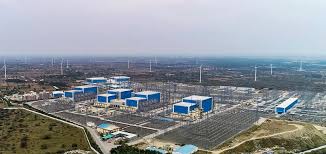


India's Ministry of Power (MoP) has tightened local content requirements for high-voltage direct current (HVDC) transmission systems, issuing a revised order dated 30 April under its Public Procurement (Preference to Make in India), or PPP-MII, framework. The notification introduces a phased Minimum Local Content (MLC) roadmap for engineering, procurement and construction (EPC) or turnkey projects involving HVDC Line Commutated Converter (LCC) substations.
The earlier order had set a uniform 60 per cent domestic value addition target for HVDC LCC substations. The revised framework replaces that with four graded thresholds: 30 per cent up to 31 March 2028, 40 per cent from 1 April 2028 to 31 March 2030, 50 per cent from 1 April 2030 to 31 March 2032, and 60 per cent from 1 April 2032 to 31 March 2035.
The ministry stated that the revision was issued in continuation of its earlier PPP-MII order and that all other provisions of that order remain unchanged. The order has been issued with the approval of the competent authority. Minimum Local Content refers to the share of a project that must be sourced or manufactured within India under the PPP-MII regime.
The inclusion of HVDC systems marks a shift from high-volume equipment such as smart meters — brought under MLC norms in earlier amendments — to complex, high-value transmission infrastructure. HVDC technology is central to long-distance bulk power transfer and large-scale renewable energy integration in India, but the segment has historically been dominated by global suppliers including Siemens Energy, Hitachi Energy, GE Vernova and ABB, often working in association with domestic players such as Bharat Heavy Electricals Limited (BHEL) and Power Grid Corporation of India Limited (PGCIL).
According to news reports, the phased timeline is expected to provide a transition window for domestic manufacturers to scale up capabilities in critical HVDC components such as converter transformers, thyristor valves and control and protection systems, and to reshape bidding dynamics for large HVDC tenders.
The latest revision builds on the Ministry of Power's 2021 PPP-MII order and subsequent amendments, which itself follows the Department for Promotion of Industry and Internal Trade (DPIIT) Make in India order first issued in 2017 and revised in 2020.
India's HVDC pipeline has expanded significantly in recent years, including projects such as the Khavda–Nagpur and Bhadla–Fatehpur HVDC links, alongside the commissioning of the Adani Energy Solutions–developed 1 GW Kudus–Aarey HVDC link supplying renewable power to the Mumbai grid.
.jpeg)