Hyosung progressing with 2GW HVDC solution


South Korea's domestic HVDC industry is entering a new phase of development, with Hyosung Heavy Industries racing to localise the core technology needed to supply the government's multi-trillion won Energy Superhighway programme.
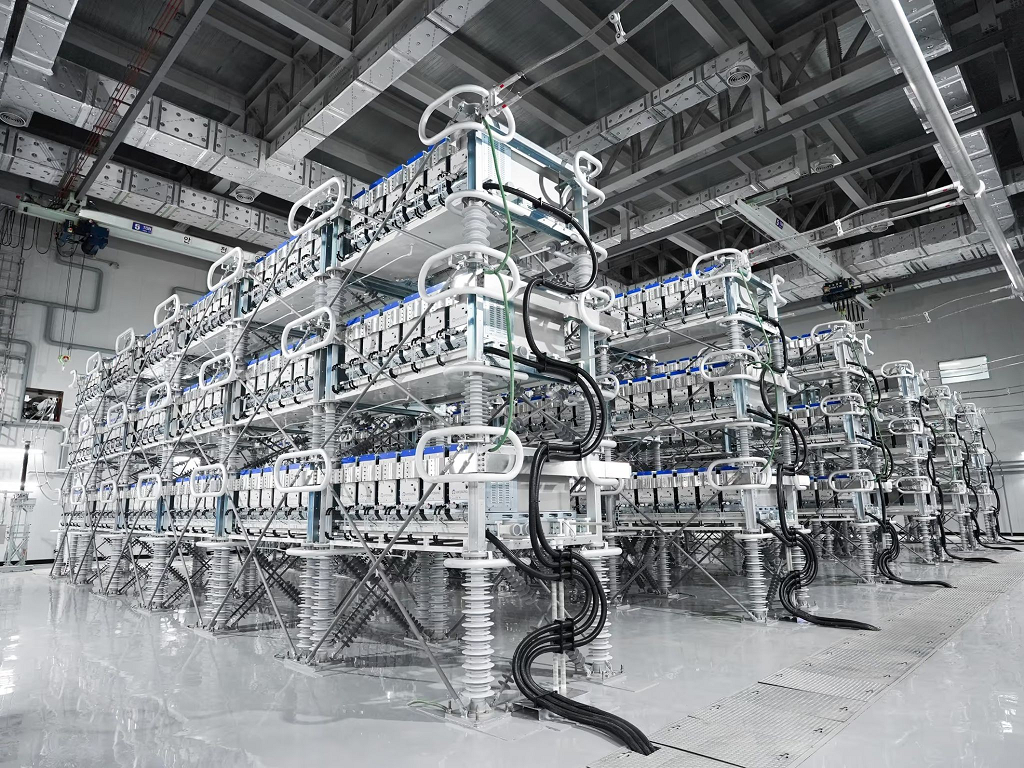
Hyosung Heavy Industries has completed the detailed design of the submodule — the fundamental building block of a 2GW voltage-source HVDC converter valve — marking what industry sources describe as a near-breakthrough in Korean-owned valve technology at this scale. The submodule combines power semiconductor devices, energy storage components, and drive and protection circuits. A valve tower is formed from hundreds of these submodules and is responsible for converting large amounts of power between AC and DC. Because submodule design conditions govern the overall valve configuration and control methodology, the completion of detailed design is regarded as a critical milestone in the development process.
Hyosung previously developed a 200MW-class voltage-source HVDC system and installed it at Korea Electric Power Corporation's Yangju substation in 2024 — the first domestically developed system of its kind in Korea. The company has spent the past two years scaling that experience up to 2GW applications. A company representative confirmed that the detailed design of the submodule has been completed and that localisation of related technologies, including other components, is progressing as planned.
In February 2026, Hyosung convened a formal review meeting at its Seoul headquarters, bringing together officials from KEPCO, the Korea Electrical Manufacturers Association, and academics from Seoul National University, Yonsei University, and Kyungpook National University. At the meeting, Hyosung presented the current status of its localisation work on converter valves and control systems for the 2GW voltage-source HVDC system. Consensus formed among participants that the West Coast Energy Highway project could serve not only as a domestic grid construction project but also as a foundation for Korean HVDC technology to enter global markets. Professor Choi Sunghwi of Seoul National University noted that HVDC technology is central to national energy security and that building a localisation ecosystem is essential.
The stakes are considerable. The West Coast Energy Expressway will span a total of four transmission systems and a combined transmission capacity of 8GW. The first line to break ground is the 220-kilometre HVDC link connecting Saemangeum and Seohwaseong, with a target completion date of 2030. That project alone is expected to require approximately 1 trillion won for converter equipment, 1.2 trillion won for transmission, and 600 billion won for substations.
The Korean government plans to establish a special purpose company to oversee the demonstration project by the end of 2026, with the full demonstration line targeting completion by 2030. Converter transformers for the programme are being developed by four major domestic companies, including Hyosung, under a government-led national project, while valves and control devices are being developed independently by each company in the private sector.
Participants at the February review meeting also noted expectations that the localisation drive would lead to the establishment of a domestic HVDC industrial ecosystem encompassing equipment, systems, and engineering, and to strengthened export competitiveness. If localisation is achieved across all three major HVDC subsystems — transformer, valve, and control device — the government-led demonstration project is expected to proceed using entirely domestically produced equipment, with Hyosung positioned to be Korea's sole provider of a complete, end-to-end HVDC solution.